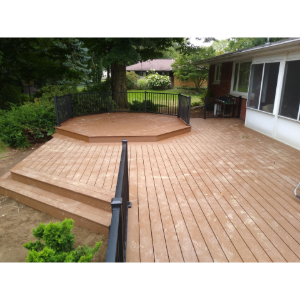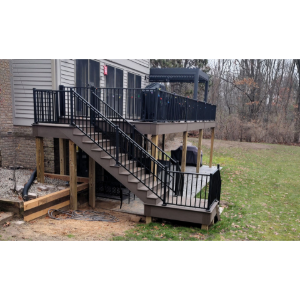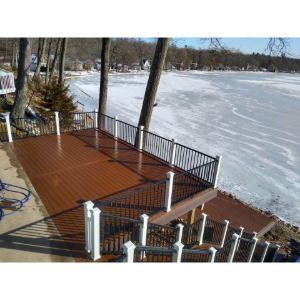



Winter can be tough on decks, especially in Michigan’s harsh climate. Without the right preparation, snow, ice, and moisture can cause costly damage to wood or even shorten the lifespan of your composite decking. In this guide, Rose-Lynn Deck Builders shares the 5 most important tips to prepare and protect your deck for winter—including how to clear debris, inspect for damage, seal wood, store furniture, and properly manage snow and ice. Whether you have a traditional wood deck or low-maintenance options like TruNorth Composite or Clubhouse PVC decking, these steps will help ensure your deck stays strong, safe, and beautiful year after year.
Here are five of the most important ways to prepare and protect your deck this winter.
1. Clear Debris and Keep It Clean
Leaves, dirt, and organic debris trap moisture against the surface of your deck. Left unchecked, this can lead to mold, mildew, and rot—especially on wood decks. Before winter sets in, sweep your deck thoroughly and clear between boards.
If you have a composite or PVC deck, cleanup is much easier. A simple wash with soap and water will usually do the job, though a low-pressure power washer can help with stubborn grime. Keeping your deck clean now makes spring maintenance much easier..
2. Inspect for Damage Before the Snow Falls
Winter conditions tend to magnify existing issues. Loose boards, missing fasteners, rot, or mildew can all worsen under heavy snow and fluctuating temperatures.
Take a few minutes to carefully inspect your deck for:
- Loose or wobbly railings
- Cracked or rotting boards
- Rusted or missing fasteners
- Soft spots or structural concerns
Repairing these issues now prevents bigger (and more expensive) problems later..
3. Protect Wood with Stain or Sealant
If your deck is built from wood, applying a water-repelling stain or sealant before winter is one of the best investments you can make. It helps keep moisture from seeping into the boards, reducing the chance of rot, splitting, or warping.
The good news? If you have
TruNorth composite or Clubhouse PVC decking, you can skip this chore entirely. These materials are designed to resist moisture, fading, and mold without the need for annual sealing or staining.
4. Store or Cover Furniture and Planters
Heavy snow and ice are just as tough on your deck furniture as they are on the decking itself. Move furniture and planters into storage if possible, or use heavy-duty waterproof covers to protect them.
If you keep planters outside, elevate them with saucers or pot feet to prevent trapped moisture from damaging the surface underneath.
5. Manage Snow and Ice the Right Way
When the snow arrives, don’t let it sit and pile up on your deck all winter. Use a plastic shovel or soft broom to remove snow without scratching the surface. Avoid metal shovels, which can gouge wood and composites.
Be cautious with ice-melt products—some chemicals can damage finishes or stain decking. Always check your manufacturer’s recommendations before using de-icers on composite or PVC materials.
Final Thoughts
Preparing your deck for winter doesn’t have to be complicated. By clearing debris, inspecting for damage, protecting wood surfaces, storing furniture, and managing snow properly, you’ll extend the life of your deck and ensure it’s ready to enjoy next spring.
And if your current deck is showing signs of age, now may be the perfect time to consider a low-maintenance composite option like TruNorth or Clubhouse PVC decking—materials that require less winter prep and last for decades.
📞 Call us at
616.822.3222 or visit
RoseLynnDecks.com to schedule your
free 50-point deck inspection and no-pressure estimate..